This writing sample was produced for a RFP response to a public solicitation. This project approach was for developing a plan to replace 3 generators within a police building for the City of Aurora.
Project Approach: First Steps
Assess the Site and Scope of Work
Our project team will complete an assessment of the existing generators and their locations. Verification of critical loads for each of the existing generators as well as potential future loads will be crucial at this step. Initially, MEP’s project team will do the following:
- Set meetings with the City of Aurora’s project team to verify an accurate scope of work
- Analyze what loads are actively on each of the existing three generators
- Conduct initial 30-day metering to understand available capacity
We understand that the generators selected will be used for future renovations of the Police Headquarters in 2020. These renovations will include:
- Adding two 20-amp outlets in each of the IT rooms that will be on generator power
- Adding five existing workstations in records to generator power
- New workstations in the backup 911 area will be added to generator power
Conduct Studies for Capacity & Compliance
Our team will conduct a short circuit study and an arc flash analysis on the equipment selected by the City of Aurora. The study will be performed per OSHA and NFPA 70E standards by our experienced survey team and Electrical Quality Control engineers.
In our experience, it is always best to have these studies performed after the electrical equipment has been officially approved by the City but before it has been shipped to the site. If equipment is found to be underrated for the fault current it is seeing, this gives you a chance to make adjustments or changes before any serious problems occur.
Our team will determine and present to the City any recommendations for the conformance of Critical Operations Power Systems (COPS) per the National Electrical Code (NEC 708). Due to the nature of emergency operations within the police headquarters, it may be necessary to apply this standard for power systems requiring continuous operation for reasons of public safety.
Project Approach: Design Options
Options for the replacement of the 300 kW and 155 kW generators as outlined in the RFP:
Option 1: Replace (1) 300 kW and (1) 155 kW generator (with rooftop radiator) with new generators to be located at the same places.
Option 2: Replace (1) 300 kW and (1) 155 kW generators with one (1) new generator to be located at the place of the 300 kW generator. New generator shall feed the loads of both the 300kW generator and the 155 kW generators.
Our project team has assessed these options and developed a few preliminary ideas of the benefits and potential issues for each option.
Benefits of Option 1:
Potentially less expensive option because it would not be necessary to modify the existing electrical distribution.
Having two generators in different locations allows for redundancy in the event of failure of either generator.
Unique Issues with Option 1:
Having one generator located on the 3rd floor of the building makes refueling more of a challenge for maintenance staff.
Benefits of Option 2:
Having one generator means only one point of maintenance, making it easier for facility staff to respond quickly to servicing needs.
This also means there will only be one point of refueling, also making it easier for maintenance staff to refuel.
By removing the generator located on the third floor, the City could re-purpose the space for other uses. This option would require additional HVAC upgrades to make it usable for general office purposes.
Unique Issues with Option 2:
Potentially more expensive since it would require a replacement of the wire/conduit to refeed all emergency loads from a single generator.
If any external issue were to arise, there would be a single point of failure since 100% of the load would be placed on a single generator.
Other Considerations:
Generator replacements can require power shutdowns to install and test the system. Properly planning this work is essential to minimizing the impacts to your building and occupants.
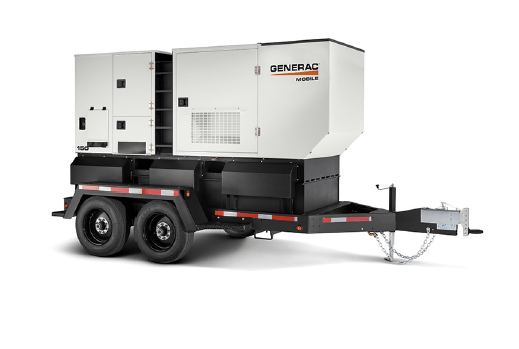
Additionally, shutdowns may need to be coordinated with the utility company. A portable backup generator can be utilized to minimize the downtime during any work needing power shutdown.
 Lauren Richey